How to Choose the Right Minecraft Server Host
Last updated: 2026-02-22 • Category: Minecraft server hosting
A practical framework to choose hosting based on workload, players, and growth.
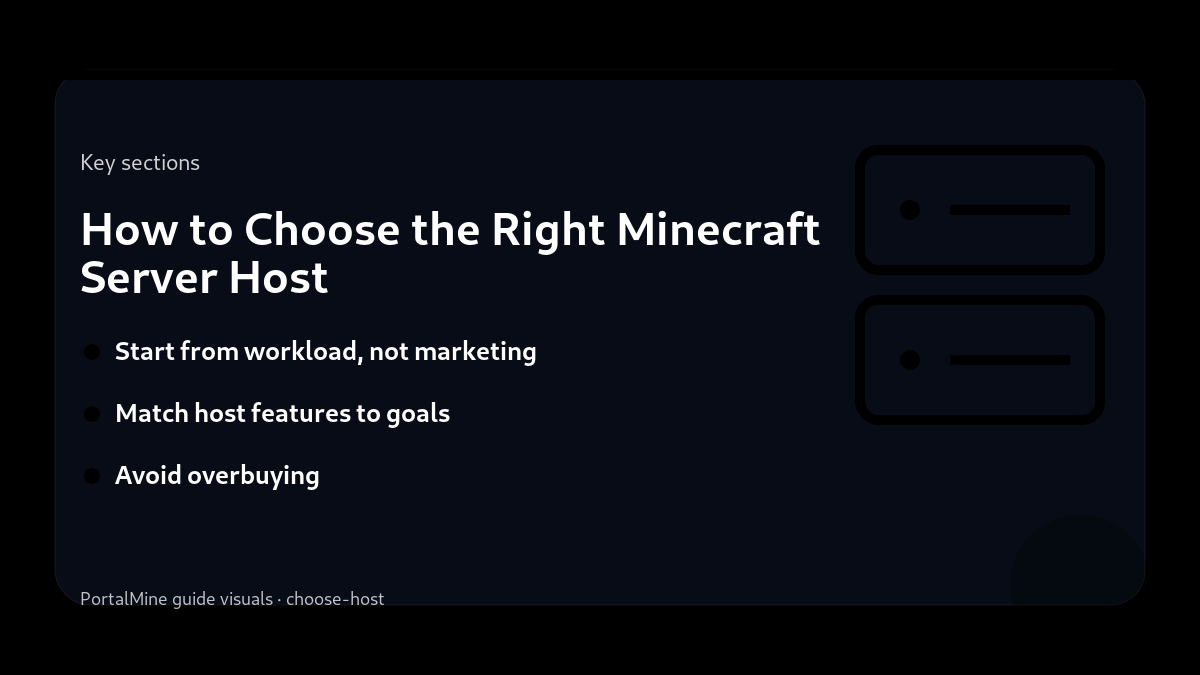
1) Start from workload, not marketing
Choosing a host begins with understanding your workload: expected players, playstyle, and peak activity. CPU tick capacity, RAM headroom, SSD storage, and network quality matter more than headline specs.
2) Match host features to goals
Friends servers need simplicity and stability; public servers need moderation tools, backups, and transparency.
3) Avoid overbuying
Start small, measure, and scale. Upgrading after real data is cheaper and safer.
4) PortalMine fit
PortalMine targets fast onboarding and clarity for small communities.
Bottom line: choose hosts that match real usage, not hype.
Operational tips
Document changes, test with a small group, and keep communication centralized. A short changelog and a pinned join message prevent repeated confusion and reduce admin workload.
Growth checklist
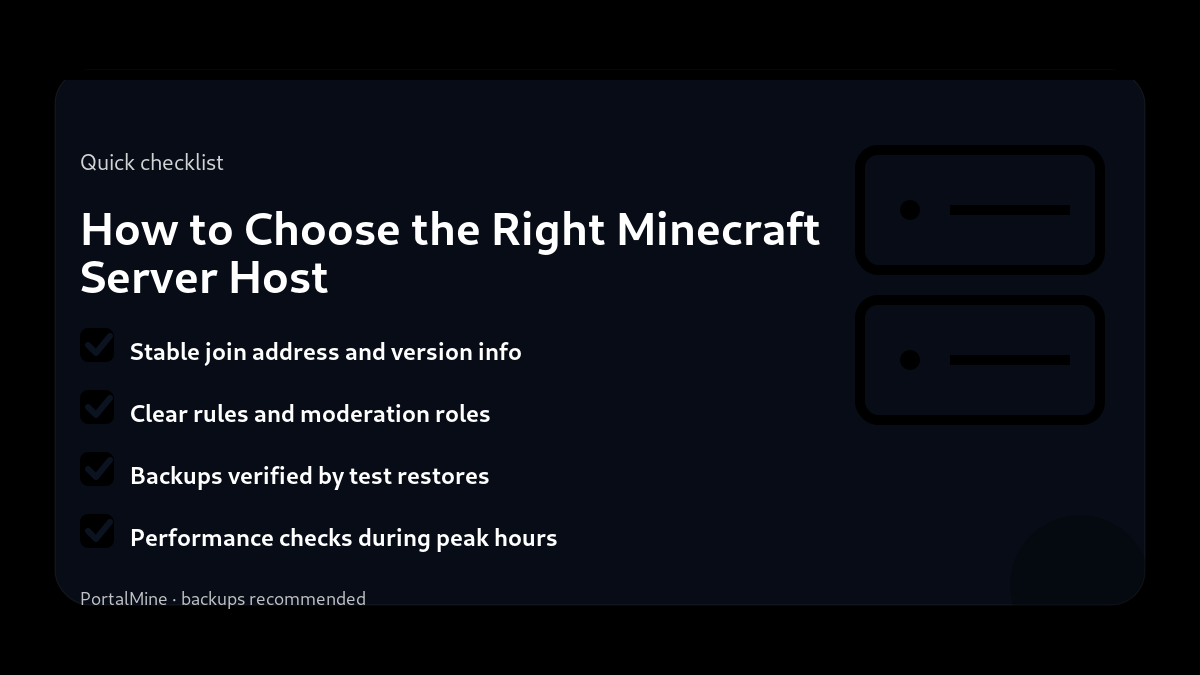
- Stable join address and version info
- Clear rules and moderation roles
- Backups verified by test restores
- Performance checks during peak hours
PortalMine note
PortalMine’s simple panel and status visibility help you iterate safely. Link your FAQ and Status pages to keep players informed.
Operational tips
Document changes, test with a small group, and keep communication centralized. A short changelog and a pinned join message prevent repeated confusion and reduce admin workload.
Growth checklist
- Stable join address and version info
- Clear rules and moderation roles
- Backups verified by test restores
- Performance checks during peak hours
PortalMine note
PortalMine’s simple panel and status visibility help you iterate safely. Link your FAQ and Status pages to keep players informed.
Operational tips
Document changes, test with a small group, and keep communication centralized. A short changelog and a pinned join message prevent repeated confusion and reduce admin workload.
Growth checklist
- Stable join address and version info
- Clear rules and moderation roles
- Backups verified by test restores
- Performance checks during peak hours
PortalMine note
PortalMine’s simple panel and status visibility help you iterate safely. Link your FAQ and Status pages to keep players informed.
Operational tips
Document changes, test with a small group, and keep communication centralized. A short changelog and a pinned join message prevent repeated confusion and reduce admin workload.
Growth checklist
- Stable join address and version info
- Clear rules and moderation roles
- Backups verified by test restores
- Performance checks during peak hours
PortalMine note
PortalMine’s simple panel and status visibility help you iterate safely. Link your FAQ and Status pages to keep players informed.
Operational tips
Document changes, test with a small group, and keep communication centralized. A short changelog and a pinned join message prevent repeated confusion and reduce admin workload.
Growth checklist
- Stable join address and version info
- Clear rules and moderation roles
- Backups verified by test restores
- Performance checks during peak hours
PortalMine note
PortalMine’s simple panel and status visibility help you iterate safely. Link your FAQ and Status pages to keep players informed.
Operational tips
Document changes, test with a small group, and keep communication centralized. A short changelog and a pinned join message prevent repeated confusion and reduce admin workload.
Growth checklist
- Stable join address and version info
- Clear rules and moderation roles
- Backups verified by test restores
- Performance checks during peak hours
PortalMine note
PortalMine’s simple panel and status visibility help you iterate safely. Link your FAQ and Status pages to keep players informed.
Operational tips
Document changes, test with a small group, and keep communication centralized. A short changelog and a pinned join message prevent repeated confusion and reduce admin workload.
Growth checklist
- Stable join address and version info
- Clear rules and moderation roles
- Backups verified by test restores
- Performance checks during peak hours
PortalMine note
PortalMine’s simple panel and status visibility help you iterate safely. Link your FAQ and Status pages to keep players informed.
Quick FAQ
What matters most?
Start small?
Key takeaways
- Focus on the basics of choose first, then add advanced tweaks when stable.
- Measure results (TPS, memory, player feedback) before and after any host change.
- Document your choose decisions so you can troubleshoot faster later.
- Start simple: change one setting at a time and test.
- Keep backups before major changes (updates, plugins, or modpacks).
Practical checklist
- Confirm your Minecraft edition and server version.
- Keep a copy of configs before changing anything.
- Restart after major changes and test with one player first.
- Watch console/logs for warnings and plugin errors.
FAQ
What is the safest way to try this change?
Back up first and change one thing at a time so you can roll back quickly.
How do I know if it helped?
Measure before/after (TPS, join time, crash frequency, player feedback).
Where can I learn more?
See related guides on the PortalMine Blog and the troubleshooting FAQ.
Ready to try it?
Create your server, pick the right version, and invite friends. If you’re new, start with the How it works page. For limits and upgrade options, see Plans & limits.